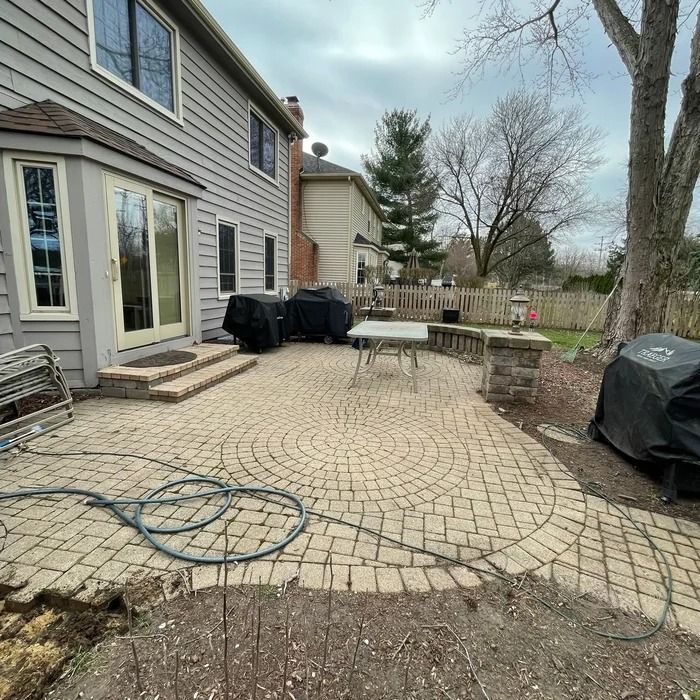

Restoring Function to Settled Outdoor Spaces
Patio Restoration and Repair in Aurora for uneven surfaces, drainage issues, and worn stone that compromise safety and usability
Uneven patio surfaces develop when the base settles unevenly or when individual pavers shift out of position over time. You notice lips between stones where water collects, areas that rock underfoot, or sections that slope toward the house rather than away from it. Sixto And Sons Pavers Landscaping restores aging patios through leveling, joint sanding, sealing, and stone replacement—addressing these issues without the cost of full removal and reinstallation. Most patios that appear beyond repair actually have intact bases that need minor correction and surface work to return them to proper function.
Restoration begins with assessment of what caused the current condition—whether settling resulted from base erosion, inadequate initial compaction, or root intrusion from nearby trees. Pavers get lifted in affected sections, the base receives additional material and recompaction, and stones are relaid to the correct elevation and slope. Polymeric sand then fills joints to lock pavers in place and prevent weed growth and insect tunneling that destabilize the surface over time.
Arrange an on-site inspection to determine whether your patio requires full restoration or targeted repairs in specific sections.
What You Notice Once Leveling and Sealing Finish
The restoration process for both paver and natural stone patios involves removing and resetting stones in problem areas, adding base material where settling occurred, and applying new joint sand that hardens after watering. Sealing follows joint work—it protects the stone surface from staining and makes cleaning easier while intensifying color slightly. The sealant also slows surface degradation from freeze-thaw cycles common in Aurora, where moisture enters stone pores and expands when temperatures drop.
After restoration, water no longer puddles in low spots, furniture sits level without wobbling, and the surface feels solid underfoot without individual stones shifting when you walk across them. Drainage works as originally intended—water moves away from the house and off the patio rather than collecting against the foundation. The color of the stone appears more uniform once cleaned and sealed, and weeds no longer grow up through the joints where polymeric sand has cured in place.
Restoration extends the lifespan of existing patios by decades when performed before base failure becomes severe. Minor settling caught early requires lifting and resetting only the affected area, while patios left unaddressed eventually need complete base reconstruction. Not all damage requires professional intervention—surface staining and light joint sand loss can be managed by homeowners, but uneven sections and drainage problems indicate base issues that need proper correction.
Answers to Frequent Service Questions
Property owners in Aurora typically want to know whether restoration makes sense compared to replacement and what the process involves.
What does patio leveling actually involve?
Affected pavers are removed carefully to avoid breakage, the base underneath receives additional compacted material to bring it to grade, and stones are relaid with proper slope for drainage.
When does a patio need full replacement instead of restoration?
Replacement becomes necessary when the majority of the base has washed out or settled, when most pavers are cracked beyond reuse, or when the original installation lacked proper base depth for Illinois climate conditions.
How does sealing affect stone appearance and maintenance?
Sealing intensifies the natural color of pavers and natural stone, creates a barrier against oil and organic stains, and makes routine cleaning more effective by preventing dirt from penetrating the stone surface.
Why do joints need polymeric sand rather than regular sand?
Polymeric sand contains additives that harden when activated with water, which prevents washout during heavy rain, stops weed germination, and keeps insects from tunneling underneath pavers.
What causes some patio sections to settle while others remain level?
Settling usually results from water erosion of base material through gaps in joint sand, inadequate compaction during original installation, or soil conditions that vary across the patio footprint.
Sixto And Sons Pavers Landscaping assesses the extent of damage and base condition before recommending restoration or replacement. Contact us to schedule an inspection and receive a detailed restoration quote based on your patio's current state.