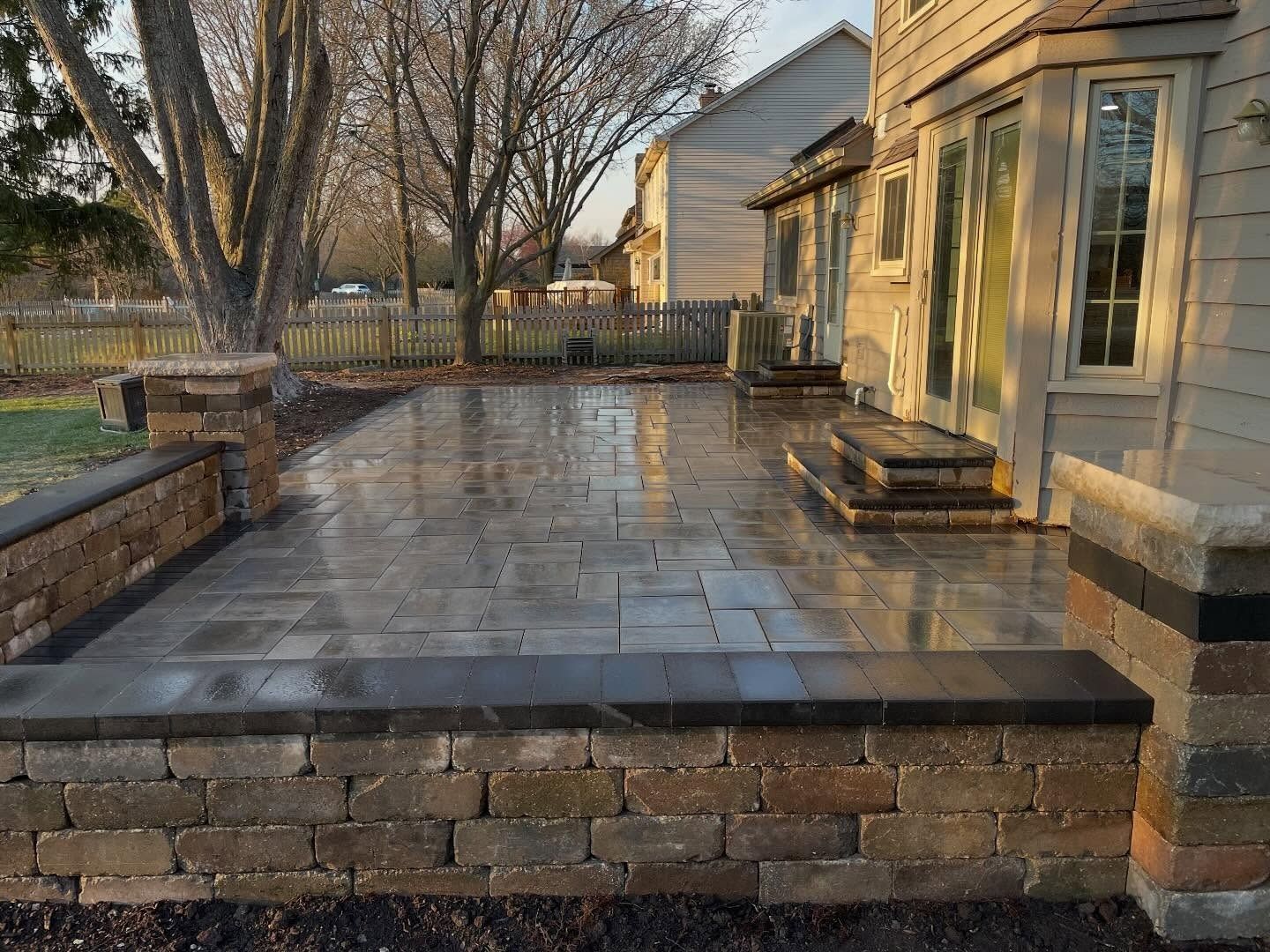

Surfaces That Manage Water Permanently
River Rock and Decorative Stone in Aurora for areas where organic mulch washes away or drainage problems require materials that let water pass through without eroding
Decorative stone doesn't decompose or shift position once installed correctly, which makes it useful for sloped areas, drainage channels, and high-traffic zones where mulch would break down or scatter. River rock installation creates visual contrast in outdoor spaces while solving functional problems—water flows between stones instead of pooling on the surface, and the material stays in place during storms that would displace lighter ground covers. Sixto And Sons Pavers Landscaping positions river rock and decorative stone in Aurora for both design purposes and erosion control, using fabric underlayment to prevent stones from sinking into soft soil over time.
The installation process involves excavating to consistent depth, laying permeable fabric that blocks weed growth without stopping water drainage, and spreading stone to a thickness that keeps the fabric covered even as individual stones settle slightly. Stone sizing affects both appearance and function—larger river rock allows faster water passage but creates a coarser texture, while smaller decorative stone offers smoother visual flow but requires occasional leveling if foot traffic displaces it.
Request design ideas and project estimates to review stone types and layout options for your property's drainage and aesthetic goals.
Why Proper Installation Works for Long-Term Use
Stone installations fail when the underlayment tears or when the excavation depth isn't uniform, causing some areas to show fabric while others have stones stacked too thick to look intentional. Sixto And Sons Pavers Landscaping grades the surface before laying fabric and calculates stone volume based on coverage area and desired depth, so the finished installation looks consistent across the entire space.
After installation, you'll see clean separation between planting beds and stone areas without ongoing maintenance to redefine borders, and water drains through the stone layer instead of running across the surface and carrying soil with it. Properties with downspouts or slope transitions benefit from stone placement that directs water away from foundations without creating visible channels or eroded paths.
Stone doesn't require seasonal replacement, but edging may need adjustment over time if ground frost cycles push stones outward from their original boundaries. Rinsing accumulated dust or debris from the stone surface every few years keeps the color visible and maintains the drainage gaps between individual pieces that allow water to filter down rather than run off.
What Property Owners Usually Ask
Residential and commercial clients considering stone installations typically ask about material selection, long-term performance, and how stone compares to traditional mulch for different uses.
What size river rock works best for drainage applications?
Two-to-four-inch river rock provides enough space between stones for water to flow freely while remaining heavy enough to stay in place during runoff from downspouts or slope drainage in Aurora.
How does decorative stone control erosion on slopes?
Stone weight prevents soil displacement during rain events, and the spaces between stones allow water to percolate downward instead of running across the surface and carrying soil with it.
When should property owners choose stone instead of mulch?
Stone makes sense for areas with persistent drainage issues, high foot traffic, or locations where organic material would wash away or decompose too quickly to justify annual replacement.
Why is fabric underlayment necessary for stone installations?
Fabric prevents stones from sinking into soft soil and blocks weed seeds from reaching the surface while still allowing water to drain through, which maintains both function and appearance over time.
How long do river rock installations last before needing attention?
Stone installations remain functional for decades with minimal maintenance beyond occasional rinsing to remove debris, though edging may need resetting if freeze-thaw cycles shift stones near borders.
Sixto And Sons Pavers Landscaping evaluates site conditions and recommends stone types based on drainage needs and design preferences. Reach out to schedule an assessment for your residential or commercial property's stone installation requirements.